Ken Dickinson Technology & AI Executive

The next competitive advantage will belong to companies that can build differently.

I build and modernize engineering organizations, operationalize AI, and put the systems, teams, and operating models in place that turn emerging technology into business results.

At Jewelers Mutual, that meant giving eleven business units the ability to build with AI while governance stayed central.

Most recently Vice President, Engineering at Jewelers Mutual. Previously Pelago, SingleStore, and SAS.

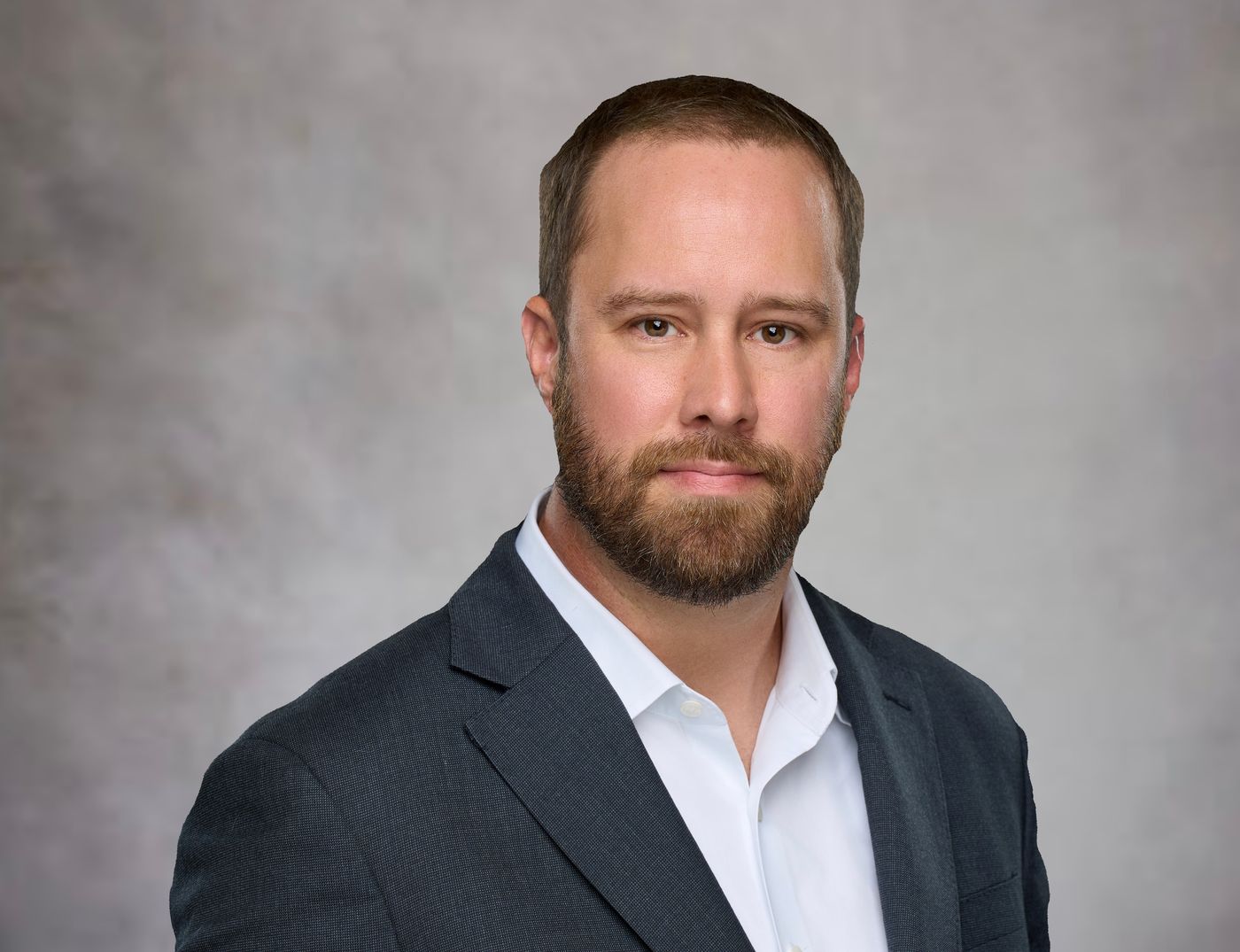
Ken Dickinson, wearing a charcoal blazer and open-collar white shirt, photographed against a plain gray studio backdrop.

The technology transformation ahead

AI is not simply a technology adoption challenge. It is an organizational capability challenge.

Access to increasingly capable models will not create durable advantage on its own. Companies need the architecture, operating discipline, governance, and leadership systems required to absorb new technology and turn it into measurable value.

  • Modern platforms
  • New operating models
  • Effective governance
  • Faster learning cycles
  • Engineering organizations designed for continuous change

Business outcomes

Capability is only useful when it changes the business.

  • 7 to 570

    Governed enterprise AI access

    Across eleven business units

    Jewelers Mutual

  • ~200

    Hours of manual work removed each month

    By a production agentic workflow

    Jewelers Mutual

  • 334%

    Improvement in engineering delivery velocity

    Through platform, AI-assisted development, and operating-model change

    Pelago

  • 47%

    Reduction in cloud operating costs

    Through architectural modernization and operational optimization

    SingleStore

The system

Technology changes constantly. The leadership challenge remains the same: aligning ambition, organization, architecture, and execution to create measurable outcomes.

  1. Executive intent

    Clarify the ambition and outcomes that matter.

  2. Operating model

    Design the organization and ways of working to make it real.

  3. Architecture & platform

    Build the foundations that are secure, scalable, and built to evolve.

  4. Product & delivery

    Deliver value continuously with speed, quality, and customer focus.

  5. Business outcome

    Create measurable impact that compounds over time.

  • Governance

    Standards, guardrails, and responsible use.

  • Evaluation

    Measure, learn, and improve continuously.

Decisions made under real constraints.

Executive leadership is not about choosing between obvious answers. It is about knowing which tradeoffs create lasting advantage.

  1. 01

    Decision

    Decentralize the building. Centralize the governance.

    AI adoption

    Jewelers Mutual

    2024 — 2026

    Executive takeaway

    Empower teams closest to the problem while keeping the controls that protect the enterprise.

  2. 02

    Decision

    Make evaluation an engineering requirement, not a review step.

    AI systems

    Jewelers Mutual

    2024 — 2026

    Executive takeaway

    In regulated environments, confidence comes from building measurement into the system itself.

  3. 03

    Decision

    Build the platform first. Prove it with a product second.

    Architecture

    Jewelers Mutual

    2024 — 2026

    Executive takeaway

    Sustainable speed comes from foundations that let every future product move faster.

  4. 04

    Decision

    Treat delivery speed as a property of the system.

    Engineering system

    Pelago

    2023 — 2024

    Executive takeaway

    Speed is not a goal. It is a capability designed into the way we build.

  5. 05

    Decision

    Treat cloud cost as an architecture problem.

    Architecture + economics

    SingleStore

    2021 — 2022

    Executive takeaway

    The most effective way to reduce cost is to change the architecture that drives it.

How I operate

Technology transformation is ultimately an organizational challenge. My role is to create the environment where teams can make better decisions, move faster, and build things that matter.

How I think about this

How I think about this

My role isn’t simply implementing AI. It’s building the operating models, engineering organizations, leadership alignment, and cultural change that allow AI to become a durable business capability.

Throughout my career I’ve been drawn to periods of transformation, whether modernizing engineering organizations, rebuilding technology platforms, or helping executive teams navigate disruptive technology.

I believe AI will become as foundational to business as the internet or cloud computing. The organizations that create lasting advantage won’t necessarily have the largest budgets or the most advanced models. They’ll be the ones that learn faster, adapt faster, and redesign how people and technology work together.

On resilience

Multi AZ? Good, you’ve acknowledged the value of a resilient system, but you’re still vulnerable. Active/Active Multi Region? Fantastic! But are any of your primary value streams dependent upon third party sub processors? If so, you’re only as resilient as they are.

Resilience isn’t a checkbox, it’s a mindset. Great engineering isn’t about avoiding risk, it’s about knowing which risks you can afford to take.

Written on LinkedIn
The record

Roles

  1. Jewelers Mutual

    Vice President, Engineering

    Sept 2024 — 2026

  2. Pelago (formerly Quit Genius)

    Vice President, Engineering

    Jan 2023 — Sept 2024

  3. SingleStore

    Vice President, Cloud Infrastructure

    Sept 2021 — Nov 2022

  4. SAS Institute

    Vice President, Enterprise Quality

    Apr 2020 — Sept 2021

  5. SAS Institute

    Director, Research & Development

    2019 — 2020

  6. Lulu Press

    Director of Software Engineering

    2017 — 2019

  7. Genesys

    Group Manager, Senior Software Engineer

    2014 — 2017

  8. Subway

    QA Analyst

    2010 — 2014

Recognition and credentials

Speaking
Constellation AI Forum 2026
AllDayDevOps Engineering transformation and AI-enabled delivery
Board engagement
Presented AI strategy, governance, risk, and adoption progress to the Board of Directors Jewelers Mutual
Education
Duke University, Fuqua School of Business Executive Program, Chief Artificial Intelligence Officer, April to October 2026
University of New Haven Computer Science, 2002 to 2005

Full résumé (PDF)

Get in touch

Get in touch

The conversations I enjoy most are with leaders working through the same questions I work on every day: how to turn AI from a promising experiment into a real organizational capability.

If that is the conversation you are having, I would welcome hearing from you.